Another innovative company has given up on revolutionizing mobile photography

2020-07-13 16:49:31
Photo by Becca Farsace / The Verge

Light, the company behind the Nokia 9’s unique array of five rear cameras, has given up on its unconventional effort to revolutionize the cameras in our pockets. In a statement to Android Authority, Light said it’s “no longer operating in the smartphone industry.”

Light set out to overcome the limitations of small camera sensors — like those in our phones — by cramming a ton of cameras (each with different focal lengths) onto one device and combining the data from all those modules. Its proof of concept for this was the $2,000 L16 camera. In a review, my colleague Sean O’Kane credited the L16 as being an engineering marvel and said it indeed delivered better image quality than most mobile devices. But it still lagged well behind mirrorless cameras and DSLRs, and clearly wasn’t cut out for all shooting scenarios.

Photo by James Bareham / The Verge
Light’s $2,000 L16 camera had 16 modules.

After that, Light partnered with Nokia on the Nokia 9 and went so far as to build a custom chip that helped the phone’s Snapdragon processor successfully capture data from its five rear cameras simultaneously. As Ars Technica notes, the Nokia 9 was very good at image stacking and a cut above all over mobile cameras in the area of depth perception.

But by the time the Nokia 9 launched, other phone makers like Google, Apple, and Huawei had already found their own magic with smart HDR and stitching multiple images into a single shot. Photos from the Nokia 9 just didn’t really stand out. Worse yet, gathering data from five 12-megapixel cameras led to slow capture and processing times, which meant you were at risk for missing a follow-up shot.

More recently, larger-sized sensors are finding their way into smartphones to help further boost image quality and detail. And companies are finding clever ways of extending reach with periscope zoom systems.

That’s led Light to follow in the footsteps of Lytro — another company that once touted groundbreaking photography tech — and significantly change course. Light’s website says the company is now focused on “a real-time 3D depth perception platform that will enable vehicles to see like humans.”

Взято отсюда

Дороги Древнего Рима

2020-07-06 20:50:05

https://ru.wikipedia.org/wiki/%D0%A0%D0%B8%D0%BC%D1%81%D0%BA%D0%B8%D0%B5_%D0%B4%D0%BE%D1%80%D0%BE%D0%B3%D0%B8

Общая протяженность дорожной сети, построенной инженерами Древнего Рима, не поддается точной оценке. В исторической литературе обычно приводится цифра 83−85 тыс. км. Некоторые исследователи называют гораздо большее число — до 300 000 км. В любом случае, дороги Древнего Рима — это выдающийся инженерный объект, сохранившийся до наших дней.
Дороги делились на:
— общественные (viae publicae, consulares, praetoriae или militares) — основные дороги, соединявшие крупные города, средняя ширина составляла от 6 — 12 метров;
— проселочные (viae vicinales) — дороги, ответвлявшиеся от основных и соединявшие населенные пункты одной области, средняя ширина около 4 метров;
— частные (viae privatae) — соединявшие крупные владения и поместья, средняя ширина от 2,5 до 4 метров).
Уже в середине V века до н. э. существовали правовые нормы, регулирующие строительство и обслуживание дорог. Помимо дорог инженеры Древнего Рима создали развитую инфраструктуру — дорожные указатели, мильные камни, мосты, понтоны, паромные переправы, почтовые станции, постоялые дворы, памятники и культовые сооружения. Основные принципы строительства дорог — прямолинейность (использование кратчайшего маршрута до назначенного места) и качество строительства. Подробно о технологии строительства здесь.
На фото: основные дороги Римской империи в виде карты метрополитена. Отсюда.

Написал xarms на engineers.d3.ru / комментировать

Взято отсюда

Бристольские часы

2020-07-06 19:19:49

Это очевидно, но если не задумываться, то немножко взрывает мозг: внятные часовые пояса были не всегда.

Часы на бристольской бирже. Фото Стивена Колбурна. Фликр

Когда-то в каждом городе были свои главные часы на какой-нибудь ратуше, которые выставляли с учётом солнца, и на них все ориентировались. Не было никаких причин синхронизировать часы между городами, потому что на фоне длительности конных переездов эта разница была ничтожна.

В Бристоле, например, было на десять минут меньше, чем в Лондоне. Это стало вызывать неудобства только с распространением железных дорог и появлением точных расписаний в середине 19 века — тогда придумали «железнодорожное время» — в мире британских железных дорог стали использовать время по Гринвичу. Это никак не мешало всю остальную жизнь вести по «настоящему» времени, принятому в каждом городе.

На здании бристольской биржи до сих пор висят часы, показывающие бристольское время (чёрной минутной стрелкой) и время по Гринвичу (красной минутной стрелкой).

Взято отсюда

Старческая "болезнь левизны" в капитализме.

2020-07-06 02:08:02
Одного не могу понять, почему лесбиянки, гомосексуалисты, трансгендеры и вообще которые "против богатых" считаются "левыми" и, главное, чуть ли не марксистами? - ЛГБТ - тупо сумасшедшие и бесящиеся с жиру "креативный класс" и буржуазия. Что же касается "против богатых!, - это идиотизм тупых. Настоящие марксисты выступают не против богатых, а против ВОРОВ, вне зависимости от того, сколько эти воры крадут - копейки или триллионы. Марксисты - против любых форм присвоения НЕ ПО ТРУДУ как путем простого воровства, гарбежа, мошенничества, так и путем любых форм эксплуатации, в том числе путем присвоения по праву владения чем-то. При чем тут ЛГБТ??? Причем тут раса как таковая? Причем тут национальная принадлежность?

Просто марксизм искусственно превратили в набор бессмысленных лозунгов, причем откуда и что означают даже правильные из них (не говоря о море натасканной чуши) мало кто - если вообще кто-либо, - сегодня понимает. Замечу, что многие "марксисты" и понимать не хотят и логика марксизма им отвратительна, так как в большинстве случаев совершенно не отвечает их ожиданиям.

А все эти, якобы, "левые" устремления - это вопль ошалевшего от суки и пошлости буржуа, старческий маразм капитализма. Взято отсюда

The Pixii rangefinder camera with Leica M-mount will be announced n Monday

2020-07-05 03:15:20


As already reporter, the PIXII APS-C “connected” digital rangefinder with Leica M-mount will be officially announced on Monday. Additional information on the camera can be found here:

The PIXII connected digital APS-C camera with rangefinder viewfinder and Leica M-mount is coming soon

First real-world preview of the upcoming PIXII APS-C rangefinder with Leica M-mount is out

Additional pictures:


Get $35 off Luminar with code PHOTORUMORS
Get 20% off Topaz Labs Gigapixel AI sale
Get 15% off Topaz Labs products with code RUMORS15
Get 30% off DxO NIK Collection 3 with code PHOTORUMORS  
Get 75% off Franzis Photographer Collection 2
Get 35% off Franzis products with code PHOTORUMORS-35
Get 20% off ON1 software with code NIKONRUMORS
Get 40% off Rocky Nook books with code PHOTORUMORS 
Get 20% off ThinkTank products with code ThinkTank20
Get 20% off eBay photo listings with code PLUS20
Get 10% off LIFE+GUARD skins sale with code JULY4
Get 10% off PhotoWhoa with code PRIDE20

The post The Pixii rangefinder camera with Leica M-mount will be announced n Monday appeared first on Photo Rumors.

Взято отсюда

The first commercial video call took place 50 years ago today

2020-07-02 05:46:26

It’s hard to imagine living through the last few months without getting to hang out with our loved ones over video calls. We're into the fourth month of pandemic-driven social distancing and shelter-in-place measures (though some of those are easing), and it's been a long time since many of us have been able to safely hug our family and friends. Zoom, Skype, Houseparty et al have helped us close that physical gap to a certain degree, so video calls have been a godsend for millions.

Most people can fit everything they need for a FaceTime or Google Duo call in their pockets these days. We've come a very long way since the first-ever commercial video calling service. 

Fifty years ago today, the first public Picturephone Mod II call took place between Pittsburgh mayor Peter Flaherty and Alcoa CEO John Harper. It was the first videophone you could install at your home or office, and 38 of them were in use across eight Pittsburgh companies on July 1st, 1970, when AT&T’s network went live

To mark the anniversary, the current Pittsburgh mayor William Peduto and Alcoa chairman Michael G. Morris are taking part in a video call today. Afterwards, a panel of Carnegie Mellon scholars are holding a Q&A about the history and legacy of the Picturephone. You can watch the livestream here.

Carnegie Mellon has a couple of Mod IIs in its possession, and it brought one of the devices up to date. It can run modern video conferencing software such as Zoom and Skype. The university's School of Computer Science also created a website full of fascinating details and documents about the history of video calling. 

That storied past actually stretches much further back than 1970. The concept of video calling emerged alongside the advent of the phone and cinema almost a century before that. Technology didn’t catch up with that flight of fancy until the 1920s. In early closed-circuit systems, you'd have a camera and a TV, which were hardwired to a similar setup in another location, to let you chat with someone else via video. So, you couldn't just call anyone, and you'd need to arrange a time to speak with another person (sorta) face-to-face.

In the 1930s, AT&T started developing a system that would allow it to stream video over its switched telephone network, rather than via dedicated cables. It showcased a prototype at the 1939 World's Fair, but it wasn't until 1964 that AT&T launched the Picturephone Mod I with public booths in New York, Washington and Chicago. As with the earlier closed-circuit system, you and the person you wanted to speak with would need to agree on a time and make reservations on each end. That convoluted, expensive setup -- a three-minute call would cost around $133 in today's dollars -- didn’t exactly draw huge crowds. The booths only stayed open for a few years.

With the advent of smaller cameras, and advancements in signal compression, switchboards and circuitry, AT&T was able to create the Picturephone Mod II for home and office use. It had a 5.5- by 5-inch black and white screen, with a 250-line resolution and a refresh rate of 30 interlaced frames per second. The camera had a resolution equivalent to 0.8 megapixels.

The Mod II had an integrated mirror, too, which you could flip to either show yourself or documents on your desk or table -- basically, an early form of screen sharing. AT&T charged $160/month to use it, the equivalent of a whopping $1,092 today, and you’d get a generous 30 minutes of call time.

Perhaps unsurprisingly, the device didn't take off. Only 450 or so Mod IIs were in use by 1973. The company had projected that 100,000 Picturephones would be active on its network by 1975.

The company, which plowed half a billion dollars into videophone research and development from the 1950s to the early '70s, kept trying to make various incarnations of Picturephone a success until the ‘90s. It failed because of high costs, low demand and a supposed widespread societal reluctance not to be seen over the phone. 

Now, of course, billions of people have smartphones, tablets and computers with webcams, and many of us are more than happy to thrust our faces onto the internet and share our visages in video calls. Changed days, indeed. The Mod II might not have been the game changer AT&T had hoped at the time, but it was a key milestone in video calling technology. It's certainly worth celebrating.

Взято отсюда

Blood donors will help researchers figure out how long novel coronavirus antibodies last

2020-07-02 04:10:55
A blood drive in Chicago at the Field Museum of Natural History. | Photo by Scott Olson/Getty Images

The American Red Cross is testing all donated blood for novel coronavirus antibodies and will use that information to learn more about the spread of COVID-19. They’ll also check back in with donors to find out how long their antibodies last.

If someone has antibodies to the novel coronavirus, it’s a sign that they were, at one point, infected with the virus. While the tests on the market now aren’t perfect, many people are still interested in getting them — including people who thought they had COVID-19, but weren’t able to get tested when they were sick.

One goal of the antibody testing initiative is to encourage more people to donate blood, says Susan Stramer, vice president of scientific affairs at the Red Cross. Stay-at-home orders meant fewer people than usual donated blood over the past few months, and supplies have been running low. The organization has seen about an 150 percent increase in the number of donation appointments since the antibody testing started on June 15th.

When someone donates blood to the Red Cross, they consent to allow their blood samples to be used in research studies. Thousands of people all over the country donate blood each month, which gives the organization a huge pool of blood samples to analyze. By testing all of those samples for novel coronavirus antibodies, the organization will also be able to get a sense of how widespread the virus is.

“We collect 40% of the nation’s blood supply, so we have an easy picture to answer questions around how many people are antibody positive,” Stramer says. So far, with two weeks of data, around 1.2 percent of blood donors have novel coronavirus antibodies.

The Red Cross will reach out to donors who have antibodies and ask them if they’re interested in participating in an additional follow-up study to test how their antibody levels may change over time. These antibodies probably help protect people against getting sick from the virus again, but a lot more research still needs to be done. Researchers still don’t have a good sense of how long antibodies against this virus actually stick around in the body. Some preliminary data suggests novel coronavirus antibodies might only linger for a few months, especially in people who didn’t have symptoms when they were infected.

The study will check in once a month to retest participants’ antibody levels. “We hope to enroll as many people as possible, but I think if we get over 30 percent, we would consider that a success,” Stramer says.

The Red Cross is also participating in a nationwide antibody study, with support from the Centers for Disease Control and Prevention. That study will include multiple blood donation organizations and will check the percentage of the population with novel coronavirus antibodies this fall and again in 2021. “It’s certainly the largest serosurvey I’ve ever been involved with,” Michael Busch, who’s helping lead the efforts as director of the Vitalant Research Institute, told Science. Each of those surveys will include 50,000 blood samples.

The projects are similar but different in scope. “Ours is really a deep dive into the details of our donors and the antibody duration, whereas the CDC program will look at changes over time,” Stramer says.

Blood donation centers have taken advantage of the thousands of samples at their disposal for scientific research for decades. Studies started through the National Heart, Lung, and Blood Institute began studying donated blood in 1989 over concerns about the impact of HIV on blood transfusion safety. Since then, donated blood has helped scientists understand more about diseases like Zika and West Nile virus.

Donated blood won’t give us a perfect snapshot of a population. Some groups are also excluded from donating blood entirely. Men who’ve had sex with another man in the past three months are ineligible, which effectively excludes non-abstinent gay men from donation. The Red Cross is also advertising their antibody tests, so people who were sick might be more likely to volunteer as blood donors — which could skew the data they’re collecting and make it more heavily weighted toward people who have antibodies. The organization is surveying donors to ask why they decided to donate, though, so they’ll have that information to accompany the study.

People also have to be entirely healthy in order to donate blood, and because COVID-19 can linger, there could be a time lag between when people are sick and when they’d be counted in these types of studies.

It’s still valuable to understand how many people who are currently healthy have novel coronavirus antibodies, Stramer says. “It really represents those individuals who may not know they were infected, or who were infected and are now symptom-free.”

Взято отсюда

Tourist gored by bison in Yellowstone after allegedly getting within 10 feet for a photo

2020-07-02 03:58:09

Last week, a 72-year-old Californian woman was gored multiple times at Yellowstone National Park when she is alleged to have gotten within ten feet of a bison in order to take a photograph of the wild animal.

In a statement shared by the National Parks Service (NPS), authorities say they’re investigating the June 25 incident that took place not far from the Bridge Bay Campground, which sits near Yellowstone Lake and is one of the largest campgrounds in the park. In the statement, Yellowstone Senior Bison Biologist Chris Geremia explains the seriousness of getting in the personal space of bison and emphasizes the importance of staying at least 25 yards (23 meters) away from the animals:

‘The series of events that led to the goring suggest the bison was threatened by being repeatedly approached to within 10 feet […] Bison are wild animals that respond to threats by displaying aggressive behaviors like pawing the ground, snorting, bobbing their head, bellowing, and raising their tail. If that doesn’t make the threat (in this instance it was a person) move away, a threatened bison may charge. To be safe around bison, stay at least 25 yards away, move away if they approach, and run away or find cover if they charge.’

The unnamed woman received immediate medical care and was flown via helicopter to Eastern Idaho Regional Medical Center. No subsequent information has been shared on the woman’s condition at this time. This isn’t the first time visitors have been injured or killed while attempting to take photographs of the animals inside Yellowstone National Park, despite multiple warnings posted throughout the park and on the NPS website.

A photograph of just one of the many signs within the park warning visitors to keep their distance from the wild animals.

The NPS reiterated in the news release the following guidelines for how distant you should keep from the various wildlife within the park:

‘Stay more than 25 yards (23 m) away from all large animals - bison, elk, bighorn sheep, deer, moose, and coyotes and at least 100 yards (91 m) away from bears and wolves. If need be, turn around and go the other way to avoid interacting with a wild animal in close proximity.’

People are understandably excited to get back out to explore nature — this incident occurred just two days after the park re-opened following restrictions put in place due to the COVID-19 pandemic — but it’s not worth risking lives (or camera gear) for the shot.

Взято отсюда

Белые ходят первыми

2020-06-26 15:50:20

https://www.newsru.com/sport/26jun2020/chess.html

Согласно действующим правилам одной из старейших настольных игр в мире, окончательно утвержденным в конце 19 века, игрок с белыми фигурами делает первый ход, а игрок с черными — второй, затем соперники ходят попеременно.

Сиднейский филиал Австралийской радиовещательной корпорации (ABC) назвал шахматы расистским видом спорта, так как по правилам белые фигуры всегда ходят первыми и имеют преимущество над черными, а это является аллегорией расового насилия.

Государственный вещатель, финансируемая местными налогоплательщиками, планирует обсудить это скандальное открытие на ток–шоу с участием известных гроссмейстеров.

Любопытно, что в марте 2019 года два известных гроссмейстера — норвежец Магнус Карлсен и голландец Аниш Гири — уже поднимали вопрос первого хода белых в рамках Международного дня Организации Объединенных Наций (ООН) по ликвидации расовой дискриминации.

"Правило первого хода никогда не касалось расы или политики, но мы можем нарушить его, чтобы послать сообщение всем, кто считает, что цвет должен давать преимущество в шахматах или в жизни", — подчеркнул тогда Карлсен.

Написал kudejar на shapito.d3.ru / комментировать

Взято отсюда

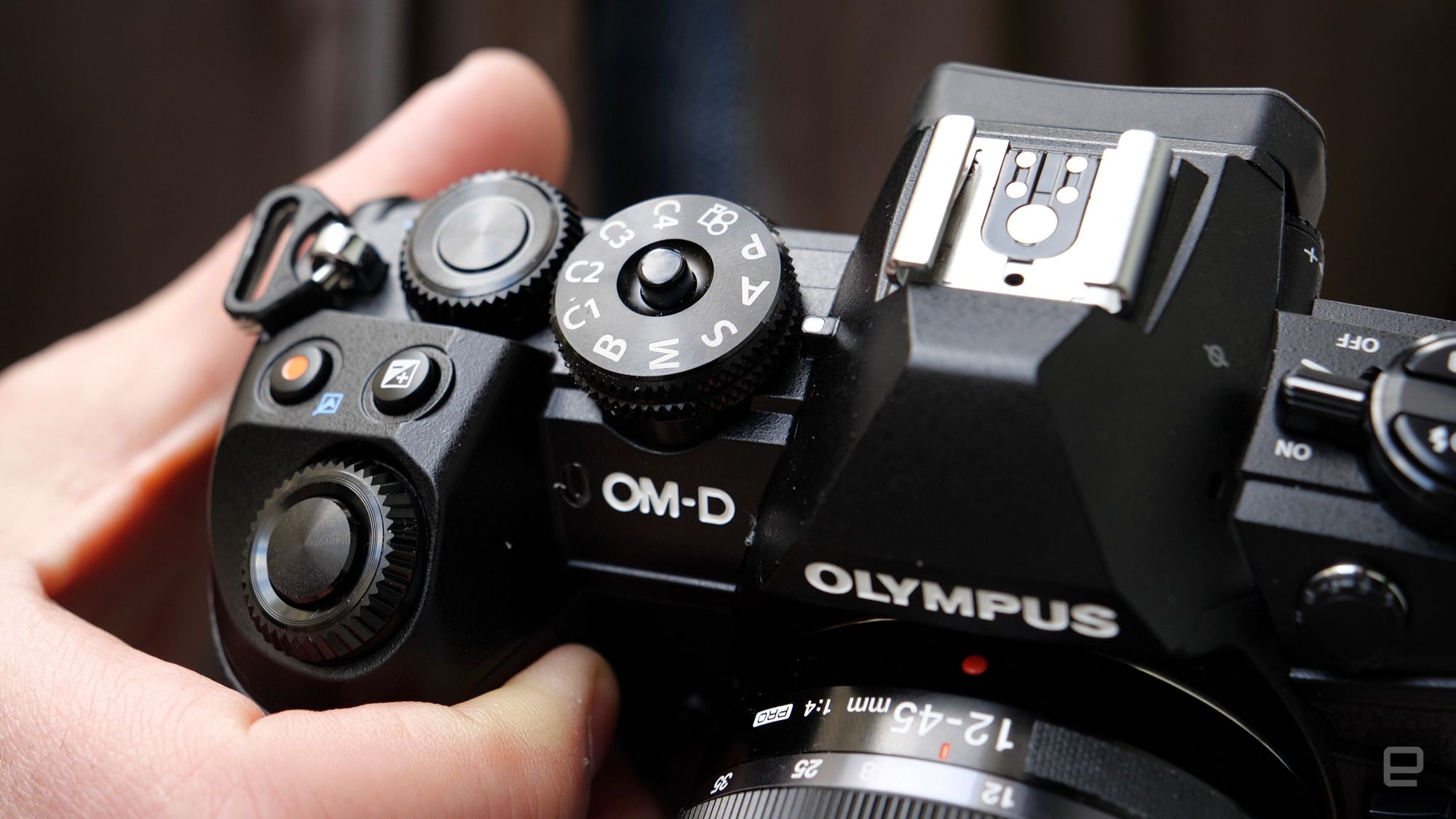
Olympus is getting out of the camera business

2020-06-24 18:42:49

Olympus has announced plans to get out of the camera business entirely, selling off its imaging division to an investment fund. Japan Industrial Partners, the company that bought the VAIO computer business from Sony, has signed a memorandum of understanding that will see Olympus spin out the division and transfer all of its shares.

The imaging division is a small part of Olympus’ business, which is now largely focused on providing medical equipment such as endoscopes. CEO Yasuo Takeuchi hinted to reporters last year that the camera division wasn’t off-limits for a sale, although the company later downplayed those remarks.

Olympus says it “implemented measures to cope with the extremely severe digital camera market, due to, amongst others, rapid market shrink caused by the evolution of smartphones,” but has concluded that its efforts weren’t enough. As it did with VAIO, JIP plans to streamline the business and will continue to develop products using Olympus brands such as OM-D and Zuiko.

Olympus’ imaging division, which has centered around Micro Four Thirds-format mirrorless cameras for the past decade, has lost money for the last three years. The Pen series, based on a classic half-frame film line, triggered the wave of retro digital mirrorless cameras with 2009’s E-P1, and Olympus released several well-received cameras throughout the 2010s.

Olympus and JIP plan to sign a definitive agreement by the end of September, with the deal expected to close later this year. Financial terms of the acquisition haven’t yet been made public.

Взято отсюда

Это потому что свет белый?

2020-06-24 17:48:54

Канадский государственный фонд поддержки исследований на переднем крае науки (New Frontiers in Research Fund) выделил грант на деколонизацию теории света в современной физике и обогащение её традиционными знаниями индейцев и инуитов.

Грант в размере 163 тысяч долларов получили два физика и специалист по культуре коренных народов Канады из университета Конкордия в Монреале.

Грант — часть программы по финансированию высокорисковых исследований с большой возможной отдачей (high Risk, high revard). Одним из главных рисков своего проекта авторы проекта считают то, что им будет трудно найти достаточное количество студентов — индейцев и иннуитов для участия в программе исследований.

Одна из трёх учёных, Таня Таджмел (физик) считает, что канадских студентов обучают науке о свете без необходимого исторического контекста. “Кто от этого выигрывает?” — задаётся вопросом она.

Её коллега Лоуэлин Вайт, специалист по культурам аборигенов, добавляет, что западная наука пропитана колониальным мышлением, а научные знания канадских аборигенов многие десятилетия подавлялись и приуменьшались и только сейчас наконец-то начинают получать признания как равноценные западной науке. И без инкорпорирования в науку знаний индейских старейшин и шаманов ни о каком равноправии не может быть и речи.

Третий участник группы, физик Илге Сэльзман, говорит, что утверждение о том, что свет — электромагнитная волна, распространяющаяся со скоростью 300000 километров в секунду не может существовать отдельно от дискуссии о социальных процессов, происходящих в научном сообществе, и в первую очередь — от вопроса расового равноправия. Колониальная научная иерархия, ведущие позиции в которой занимают Ньютон, Эйнштейн и Планк, нуждается в пересмотре.

Более 90% от научного гранта на деколонизацию физики пойдет напрямую студентам — представителям коренных народов для изучения того, чем могут обогатить западную науку племенные старейшины и шаманы.

Новость прошлогодняя, но не фейк.

Взято отсюда

Olympus is giving up on cameras

2020-06-24 16:01:33

Despite denying persistent rumors that it would exit the camera business, Olympus is doing exactly that. The company has announced that will sell its camera business to Japan Industrial Partners (JIP), the same company that purchased Sony’s VAIO PC division (via The Verge). Olympus will now focus on its much larger business supplying industrial and medical imaging equipment.

Olympus said it improved cost structure, focused on high-profit cameras and lenses and took other steps to “cope with the extremely severe digital camera market.” Despite those efforts, however, the company said it “recorded operating losses for three consecutive fiscal years up to the term ended in March 2020.” It likely didn’t help that the company was rocked by a $1.7 billion accounting scandal in 2013.

It’s unclear how this might affect owners of Olympus mirrorless cameras like the flagship O-MD E-M1 Mark III. JIP plans to streamline the business as it did with VAIO to make it “more compact, efficient and agile,” according to Olympus. It will also sell the existing camera models and develop new ones, so it would presumably support current Olympus owners. Beyond that, we don’t know what JIP plans to do with Olympus, and it didn’t exactly bring Sony’s former VAIO division to greatness.

Olympus has implemented measures to cope with the extremely severe digital camera market, due to, amongst others, rapid market shrink caused by the evolution of smartphones; Olympus has improved the cost structure by restructuring the manufacturing bases and focusing on high-value-added interchangeable lenses, aiming to rectify the earning structure to those that may continue generating profit even as sales dwindles. Despite all such efforts, Olympus’s Imaging business recorded operating losses for 3 consecutive fiscal years up to the term ended in March 2020.

Last year, Olympus CEO Yasuo Takeuchi let slip that a sale of its consumer camera division wasn’t out of the question. However, the company took pains to walk that comment back, and marketing and sales VP Akihiko Murata also told Engadget that “we want to say to our users, ‘Please count on us.’”

After reviewing the O-MD E-M1 III earlier this year, I was struck by the company’s lack of innovation on its flagship camera compared to other manufacturers. It’s normally an ominous sign for a company when it stops developing new product tech.

The sale of Olympus also has implications for the camera world at large. Olympus and Panasonic are the only companies supporting the Micro Four Thirds format, a segment playing third-fiddle to APS-C and full-frame systems. Those larger sensors are better in low light and produce soft “bokeh” backgrounds, helping camera manufacturers like Sony distinguish its products from increasingly excellent smartphone cameras.

Olympus still relies exclusively on Micro Four Thirds for its interchangeable lens cameras. However, Panasonic now has its own lineup of full-frame mirrorless cameras that have attracted a lot of attention, particularly in the video market. That gives it other options depending on what happens to Olympus, so we’ll be keeping a close on both companies over the next few months. Following due diligence, the sale will conclude by September 3rd, 2020, Olympus said.

Взято отсюда

А вот , кстати, я согласен

2020-06-23 23:24:49
Отвлекитесь от личности на коне и посмотрите на скульптуру в "абстрактном ключе". Ее абсолютный, подчеркнутый, расизм просто бьет в глаза. Это памятник "бремени белого человека" в абсолютно незамутненном виде.


В чем сегодня "государственный расизм" в США?  - Примерно в том же, например, что и в России по отношению к "черным" : меня за всю жизнь милиция не останавливала для проверки документов НИ РАЗУ, а коренного москвича, сына моего соавтора - армянки, не только останавливала чуть не каждый день, но и забирала в отделение для выяснение личности, когда он как-то забыл паспорт дома.  Помнится и рогозинское: "Очистим страну от мусора..." . Ну и бытовой расизм вдогонку: "Квартира сдается только русским/славянам" - Никогда таких объявлений не видели...  Норм?

Вот так и в Америке. Только еще более шизофренично, чем в России: одной рукой преференции для чернокожих, с другой - там, где белого не заметят, или он отделается легким испугом, черного заметят и душу вытряхнут. И жилье не сдадут под любым предлогом. А если в приличном коммьюнити поселяется черная семья, там и цены на дома могут начать падать...Это реалии. И это сидит в обществе очень глубоко и американские собратья Рогозина по разуму не менее распространены в США, чем в России уж точно...

И повторяю: Не случайно "золотой гроб" Флойду.

Гроб понадобился, чтобы превратить, пусть в данном случае и неправедно убитого, но уголовника, в символ всей черной Америки, фактически прилепив метку "уголовник" каждому из афроамериканцев...И подкрепив это, для пущего эффекта, организацией погромов и разграбления магазинов.  Это ли не изощренный расизм, пусть и не очень осознаваемый людьми в массе своей не склонных к пониманию смысла символики, присущей "демиургам" ?

Что же касается; того, сносить ли конкретный памятник? -  "Если бы директором был я", я бы начал Новый мир с создания Музея Расизма, филиалы которого обязаны быть и в США, и в Испоании, и в Португалии, и в Британии, и во Франции, и в Голландии, и в Бельгии - во всех "цивилизованных странах". Памятник, с которого началось обсуждение, мог бы с полным основанием открывать экспозицию такого музея.

Как-то так.
Взято отсюда