(https://ria.ru/20200511/1...) Взято отсюда


Последнее время часто встречал разговоры о том, что анекдоты — умирающий жанр, а знание их — признак того, что тебе пора на пенсию. Даже «Редакция» про анекдоты вышла.
Вроде тут ничего удивительного: с анекдотом происходит то же, что и со всем остальным — переформатирование под новые общественно-технические реалии. Большая часть общения между людьми перешла в онлайн, а анекдоты плохо приспособлены для рассказывания в чате.
Смешную ситуацию с неожиданным или абсурдным финалом намного удобнее стало показывать картинкой с подписью или нанокомиксом, это сильно экономит время. Вместо того, чтобы описывать обстоятельства и называть героев, можно взять известный кадр из фильма или известного персонажа и просто сразу подписать панч. Это ещё и смешнее получается, потому что нет этого мучительного процесса ожидания смешного финала и соотнесение затраченного времени с качеством шутки.
Фраза «как в том анекдоте» звучала дебильно во все времена, как сейчас бы прозвучала реплика «прямо как на том стикере»! Просто отправь стикер или что там у тебя, и если это будет в тему, люди посмеются.
Людей, которые умеют хорошо рассказывать анекдоты, мало. Даже во времена, когда анекдоты были «актуальны», в исполнении большинства людей они звучали плохо. Кстати, чтец анекдотов из «Редакции» выше — максимально уныл, так что неудивительно, что люди почти не смеются. Сказать «ой, я так плохо рассказываю анекдоты» могут о себе многие. Переход к формату, где исполнительский талант не нужен, помогает всем сторонам — проблемы «у меня так плохо пересылаются мемчики» не существует.
Взято отсюдаWhen a woman named Shanawdithit died from tuberculosis in Newfoundland nearly 200 years ago, it was widely believed that her death marked a tragic end to her people’s existence.
For centuries, the Beothuk had thrived along the rocky shores of the island, taking on a near-mythical status as descendants of the first people encountered by Norse explorers in what is now Canada. But their population was devastated by decades of starvation and diseases, and when she died in 1829, Shanawdithit was believed to be the last of her line.
New research from Memorial University, however, has found Beothuk DNA probably still exists in people alive today – a discovery that would rewrite the history of the Newfoundland’s early inhabitants, even as it confirms the accuracy of local First Nations oral tradition.
“We’ve got good evidence that we have genetic continuity from the Beothic into modern persons,” said biologist Dr Steve Carr.
But while the finding would trigger a rethink for historians, the notion is not surprising to local Indigenous groups.
Mi’kmaq oral history has long asserted a shared ancestry with the original inhabitants of Newfoundland, and local First Nations have worked closely with Carr to help lend genetic evidence to their own traditions.
“There were always connections or friendly relations going back more than 200 years ago and when you mingle that way, periodically, things would happen,” said Chief Mi’sel Joe of the Miawpukek Mi’kamawey Mawi’omi, a Mi’kmaq First Nation in Newfoundland.
Historians believe the Beothuk are descended from a group that braved the ocean to cross from Labrador to Newfoundland thousands of years ago and whose distinct culture emerged around 1500 CE. At one point, as many as 2,000 Beothuk lived in communities scattered around Newfoundland.
For generations, they largely resisted and avoided relations with European settlers; the few interactions between the two were defined by violent encounters.
Early European settlements on the coast cut off Beothuk access to critical salmon and seals – forcing them to move further inland where they sustained themselves on caribou before finally succumbing to starvation and disease.
But Carr’s research suggests it was only a “cultural extinction”; their genetic legacy lives on.
In his study, Carr used DNA samples from Shanawdithit’s aunt and uncle – Demasduit and Nonosbawsut – whose skulls were taken to the Royal Museum in Scotland in 1828. After a long campaign by Chief Joe’s community, the remains were repatriated to Newfoundland in March.
After running samples through a genetics database, Carr was able to find his “smoking gun” – a man in Tennessee who was genetically similar to Nonosbawsut, but had no known Indigenous ancestry.
With is only a small amount of data to work with, Carr hopes more samples will further demonstrate a connection.
“It’s easy to obtain the DNA sequence from somebody and you can count the number of similarities. That’s a very easy thing to do. But to reconstruct the patterns of a relationship is a very challenging problem,” said Carr, adding that further research into the known movement and connections between the Beothuk and Mi’maq was still required.
The findings also illustrate the way in which genetic uniqueness – in this case the distinct sequence of Beothuk mitochondrial genomes – can persist intact for generations. While humans share an immense amount of DNA that traces back millennia, said Carr, the intent of his research lay in teasing out the subtle and distinguishing differences between known groups.
For years, academia has ignored the oral histories of Indigenous peoples, said Chief Joe.
“Academics are hard people to convince. They often have this mindset that ‘this the way it was’ – no matter what information we give them to the contrary,” he said.
He described a frustrating experience in a land claims court, where the adjudicator suggested the Mi’kmaq first arrived in Newfoundland in the 1700s.
“But we have an oral history of British sailors meeting our people and asking for directions. We drew them a map on birch bark. If this is the first time we had ever been on the land, how could we draw a map?” said Joe.
“It’s convenient for government, for everyone, to ignore people who had no written history”
The community is excited to keep working with Carr on further testing, said Joe, to further strengthen the evidence of shared ancestry.
“This is a big thing for us,” he said. “But it all comes from something we already knew.”

https://www.facebook.com/minecoenergy/posts/3014648588591397?__tn__=-R

Надежду на это дало украинское правительство, заявив о готовности применять мощности своих АЭС для майнинга криптовалют. Министерство энергетики Украины в своем заявлении в Facebook отмечает, что это открывает дорогу к абсолютно новой экономике, а также новым подходам и новой системе рынка, которая, на мой взгляд, может сделать Украину Мировым Лидером в глобальной экономике.
Предприятия по майнингу появятся рядом с атомными электростанциями, оператором которых выступает госкомпания “Энергоатом”. Предполагается, что первая запущенная ферма будет создана в Энергодаре неподалеку от Запорожской АЭС.
Наконец–то на Украине появился реалистичный план выхода из финансовой ямы, который позволит не только вернуть все долги иностранным кредиторам, но и поднять уровень жизни украинцев выше остальных стран!
Написал masusik на politics.d3.ru / комментировать
Взято отсюда
Взято отсюда
https://www.youtube.com/watch?v=Ov3tLOnm8Pc
Только сегодня понял одну вещь которую раньше никогда не подмечал.
Ещё в детстве заметил как же это удачно у группы "Земляне" вышло что когда их фронтмен гитарист Игорь Романов ушел из состава и запел клавишник Сергей Скачков, то голос Скачкова оказался очень похож на голос Романова.
Но вот сегодня просматривая это видео (понятное дело, что для записи на ТВ используется фонограмма — это обычная и нормальная практика), я обратил внимание на то что Романову как–то не комфортно перед камерой, как будто что–то его тяготит. И в этот момент я понял, что это не просто голос его похож на Скачкова, а что это на самом деле и поёт Скачков (он и стоит позади Романова).
В комментариях эта же композиция, но в других аранжировках (1983 и 1984 гг.).
Во всех трёх роликах за барабанами сидит один из основателей группы Владимир Киселёв. В начале 80–ых он оставил барабаны и целиком переключился на административную деятельность. Но на ТВ группа всегда появлялась с ним за барабанами. Я весьма сомневаюсь что в записях этой и многих других известных песен коллектива звучит его игра.
Не сомневаюсь, что это именно его указание: "петь" на ТВ Романову вместо Скачкова, и заодно операторам чаще показывать барабанщика.
Кстати, а гитарное соло–то ох как смахивает на (явно навеяно) соло Эдди Ван Халена в Michael Jackson — Beat It )))
Написал elicaster на rightmusicvideo.d3.ru / комментировать
Взято отсюда

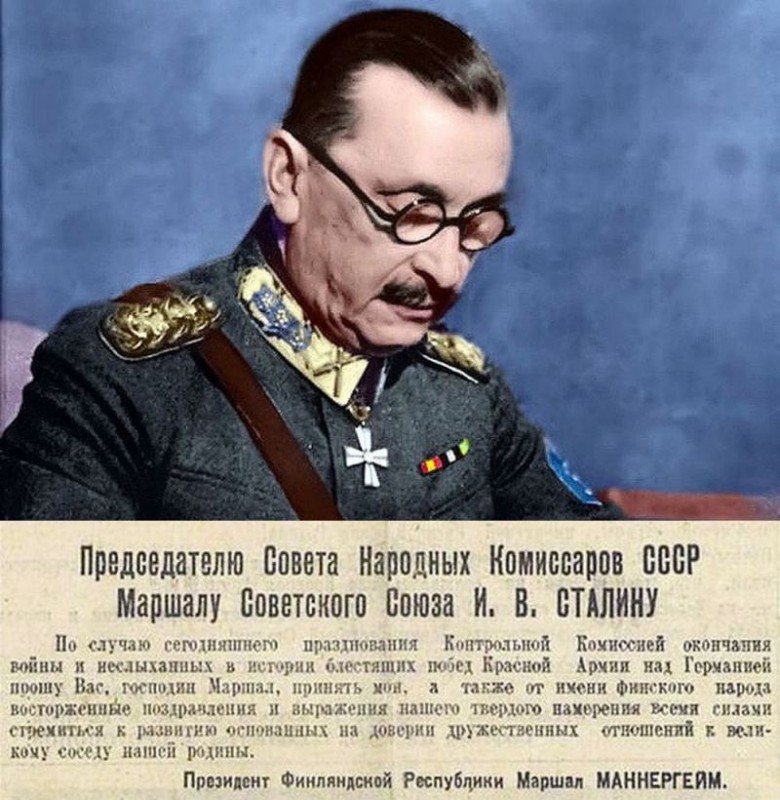
Сталин не забыл 1939 года, но относился к финскому маршалу со своеобразным уважением, Отец народов лично вычеркнул его имя из списка обвиняемых в Нюрнберге, где его хотели судить как пособника Гитлера.
Его покаяние перед Сталиным, его Мирное соглашение с СССР, которое он сам написал на русском языке, позволило ему стать президентом Финляндии. Именно Маннергейм заложил потом основы той политики, благодаря которой Финляндия успешно сотрудничала с Советским Союзом и стала процветающим государством.
Написал xaerostar на mp.d3.ru / комментировать
Взято отсюдаhttps://bloknot-rostov.ru/news/rostovskoe-otdelenie-partii-edinaya-rossiya-podari-1221409

Ветерану в Ростове «Единая Россия» подарила полотенца за 129 рублей, георгиевскую ленту и газетку.
Написал Kolobov на shapito.d3.ru / комментировать
Взято отсюдаhttps://www.youtube.com/watch?v=zXaOgdtir9o
Смотрел вот клип Технология – «Нажми на кнопку» (которым в своё время, на удивление, совершенно не интересовался, ни музыкой и ни клипом, а про песню знал слышал больше шуток и анекдотов, чем её самой); и когда, по сути, первый раз этот клип и увидел, то где–то в районе 00:05 посетило чувство дежа вю.
А ведь (кажется, немножко позднее) Технологии крутили по МузТВ–МТВ какой–то очень похожий клип. С близкой по настроению музыкой и мелодией (тоже какая–то электронщина, вроде, и не слишком танцевально–дискотечная). Тоже (вроде бы – на 90% уверен) русское. Тоже в стилистике старых чёрно–белых фантастических фильмов – только если тут какая–то «романтика советских 60–ых», то там даже ощущение, что более старая фантастика. И почему 00:05 – кажется, там был какой–то похожий фрагмент, где то ли рабочий бьёт киркой по камням/скале, и почему–то кажется, что это дело происходит на другой планете (фантастика же).
Почти уверен, что это была «группа одного хита» (и кроме этой песни, другими хитами они потом не засветились), но клип был, и звучало оно даже поинтереснее Технологии.
Нет, это не Camouflage – The Great Commandment. Всё–таки то вроде бы было русское. И какая–то более космическая фантастика, чем антиутопическая. Но по музыке тоже что–то похожее.
Что бы это могло быть?
Написал honeyman на memory.d3.ru / комментировать
Взято отсюда
Illustration by Alex Castro / The Verge
Google has extended its work-from-home policy for the remainder of 2020. After previously telling employees that they would be working remotely until June 1st, CEO Sundar Pichai has told employees that they’ll likely work from home until the end of the year, via The Information.
According to Pichai, employees whose work requires physically being in the office will be allowed back in either June or July, but with increased safety precautions and a “different” in-office experience.
But for most of Google’s staff, working at home will continue to be the new normal for the rest of the year. Google began advising employees to work from home due to the COVID-19 pandemic in early March.
Google isn’t the only major tech company to ask employees to stay home for the rest of the year. Facebook made a similar announcement yesterday, citing information from groups like the Centers for Disease Control and Johns Hopkins, along with government guidance. Google and Facebook likely won’t be the only ones, either: with two of the largest tech companies both planning to shutter their doors for the remainder of the year, odds are that we’ll start to see other companies follow.
Взято отсюдаThe Faroe Islands are now completely coronavirus-free.
Tonight, Faroese Minsiter of Health, Kaj Leo Holm Johannesen, announced via Facebook that the last remaining COVID-19 patient had recovered.
– On 2 March, the phone rang. The voice announced that we had confirmed the first of what would be 187 cases. Soon, I hope to be told that our country has zero cases left after 8.403 tests have been conducted, Minister Johannesen wrote in a status update earlier Friday evening.
And he got his wish. A few hours later, he announced in a short status update:
– The Faroe Islands are now corona-free.
The post Last COVID-19 patient recovers: After two months the Faroe Islands are finally virus free appeared first on Local.fo.
Взято отсюда
Взято отсюда
Взято отсюда
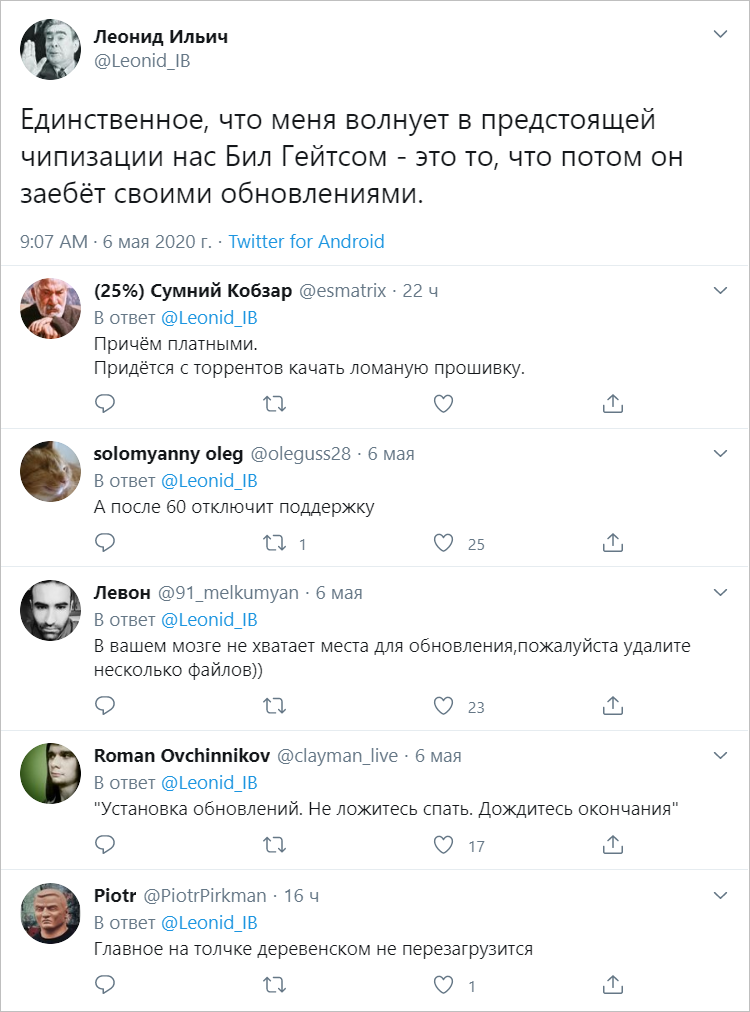
«Контакты» — нормальное слово и всегда им было. Но люди понимают его неправильно. Им кажется, что сами адреса и телефоны — это и есть «контакты», в то время как самом деле контакты — это акты общения. «Близкие контакты третьего рода» — это не список телефонов. «В контакте» — это на связи, а не внутри адреса электронной почты. Короче, назвать на сайте раздел «Контакты» — нормально, а сказать «сбрось мне его контакты» — нет.
Десять лет назад я писал:
Смысл в не в том, что сами адреса и номера — это некие «контакты», а в том, что с помощью всего этого контакт можно установить.
И всё же в русском языке закрепилось новое значение слова «контакты» как гиперонима над номерами телефона, адресами электронной почты и имён в соцсетях. Закрепилось, потому что это нужное и полезное слово, а более удачного у нас просто не было и нет. Придётся вздохнуть и смириться.
«Настройки» — невозможное множественное число слова «настройка», кривой интерфейсный перевод английского settings. По-русски правильно говорить и писать «настройка» — это уже подразумевает процесс выбора многочисленных параметров. В своих интерфейсах я так и пишу.
Но, как оказалось, людям удобно думать не о процессе, а о месте, где сами эти настраиваемые параметры, во множественном числе, лежат, иначе кривой перевод «настройки» бы не прижился. Слово «параметры» длиннее и как будто бы не такое точное, да и в английском для него есть прямая пара parameters. То же с «опциями», у которых, к тому же, несколько другой смысл и чужеродный корень.
«Подписки» — такое же невозможное множественное число слова «подписка».
Но тут ещё хуже, чем с настройкой. Если словом «Настройка» можно назвать место с многочисленными параметрами, и это никого не смутит, то словом «Подписка» назвать перечень изданий, на которые ты подписан, совсем трудно. Подписка — это только сам процесс, а для перечня, как ни крути, нужно писать ужасное «мои подписки» или вообще искать способ выразить мысль иначе.
Когда-то люди с хорошим русским языком отличались от людей с плохим русским языком тем, как они использовали эти слова. Но сегодня люди с хорошим русским языком отличаются только тем, что хотя бы способны понять, что именно меня смущает. Но говорят они всё равно как все.
Взято отсюда
Getty Images
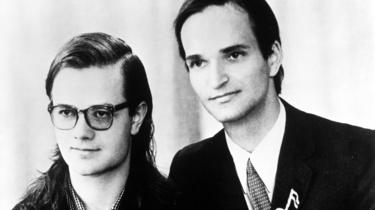
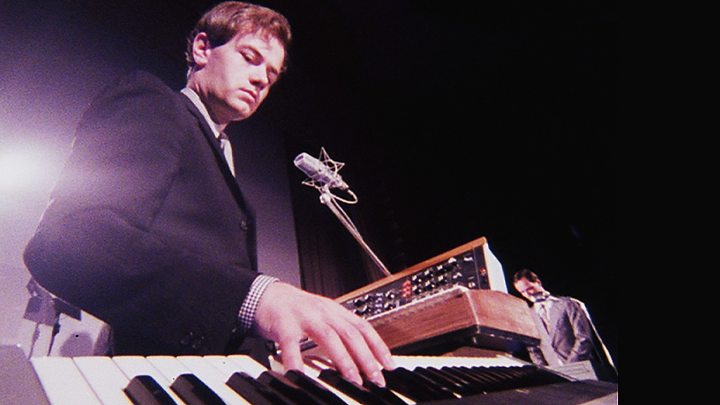
Florian Schneider, co-founder of highly influential electronic pop group Kraftwerk, has died at the age of 73.
The German quartet set the template for synthesiser music in the 1970s and 80s with songs like Autobahn and The Model.
They achieved both musical innovation and commercial success, and inspired scores of artists across genres ranging from techno to hip-hop.
Midge Ure described Schneider as "way ahead of his time", while singer Edwyn Collins summed it up with: "He's God".
Schneider formed the group with Ralf Hütter in 1970, and remained a member until his departure in 2008.
A statement said he "passed away from a short cancer disease just a few days after his 73rd birthday".
Getty Images
Tributes flowed from the music world. Spandau Ballet's Gary Kemp said Schneider was "such an important influence upon so much of the music we know", and had forged "a new Metropolis of music for us all to live in".
Duran Duran keyboardist Nick Rhodes remembered hearing Autobahn and "how radically different it sounded from everything else on the radio".
It "sparked my lifelong admiration for their innovation and creativity", and the group's "influence on contemporary music is deeply woven into the fabric of our pop culture", he wrote.
OMD said they were "absolutely devastated" at the news, and Jean-Michel Jarre also paid tribute.
The long list of artists to have been influenced by Kraftwerk included David Bowie, who named the track V-2 Schneider on his Heroes album after Schneider; as well Depeche Mode, New Order and Daft Punk.
Coldplay used a section from Kraftwerk's Computer Love in their hit Talk, while Jay-Z and Dr Dre borrowed from Trans Europe Express for their track Under Pressure. Kraftwerk reputedly turned down Michael Jackson, who wanted to collaborate.
The group faced resistance in the British music press at first, but went on to achieve both musical innovation and commercial success.
They broke through with the hypnotic Autobahn in 1975, and went to number one in the UK with the double A-side single The Model/Computer Love in 1982.
Even Kraftwerk's image was mechanical - during the 1970s, they began to portray themselves as robotic figures, dressed identically and standing in a row behind keyboards on stage.
AFP
With striking album covers adding to their visual impact, their artistic as well as musical identity led to a series of acclaimed residencies in galleries like New York's Moma and the Tate Modern in London in the 2010s.
Schneider had left by then. He and Hütter remained famously enigmatic, but Hütter told The Guardian in 2009 his bandmate had not been "really involved in Kraftwerk for many, many years".
Analysis by Mark Savage, BBC music reporter
During the mid-70s, the band's allegiance to what they called "robot pop" set the sonic template for everything from hip-hop to house music via EDM and techno.
In some quarters, they were dubbed "the electronic Beatles", and it's hard to disagree.
Electronic music had existed before - from the musitron solo on Del Shannon's Runaway to the mind-expanding Doctor Who theme, recorded by the BBC's Radiophonic Workshop in 1963.
But Kraftwerk developed a new musical vocabulary, sculpting hypnotic, low-frequency sounds that celebrated Europe's romantic past, and looked forward to its shimmering future.
Follow us on Facebook, or on Twitter @BBCNewsEnts. If you have a story suggestion email entertainment.news@bbc.co.uk.
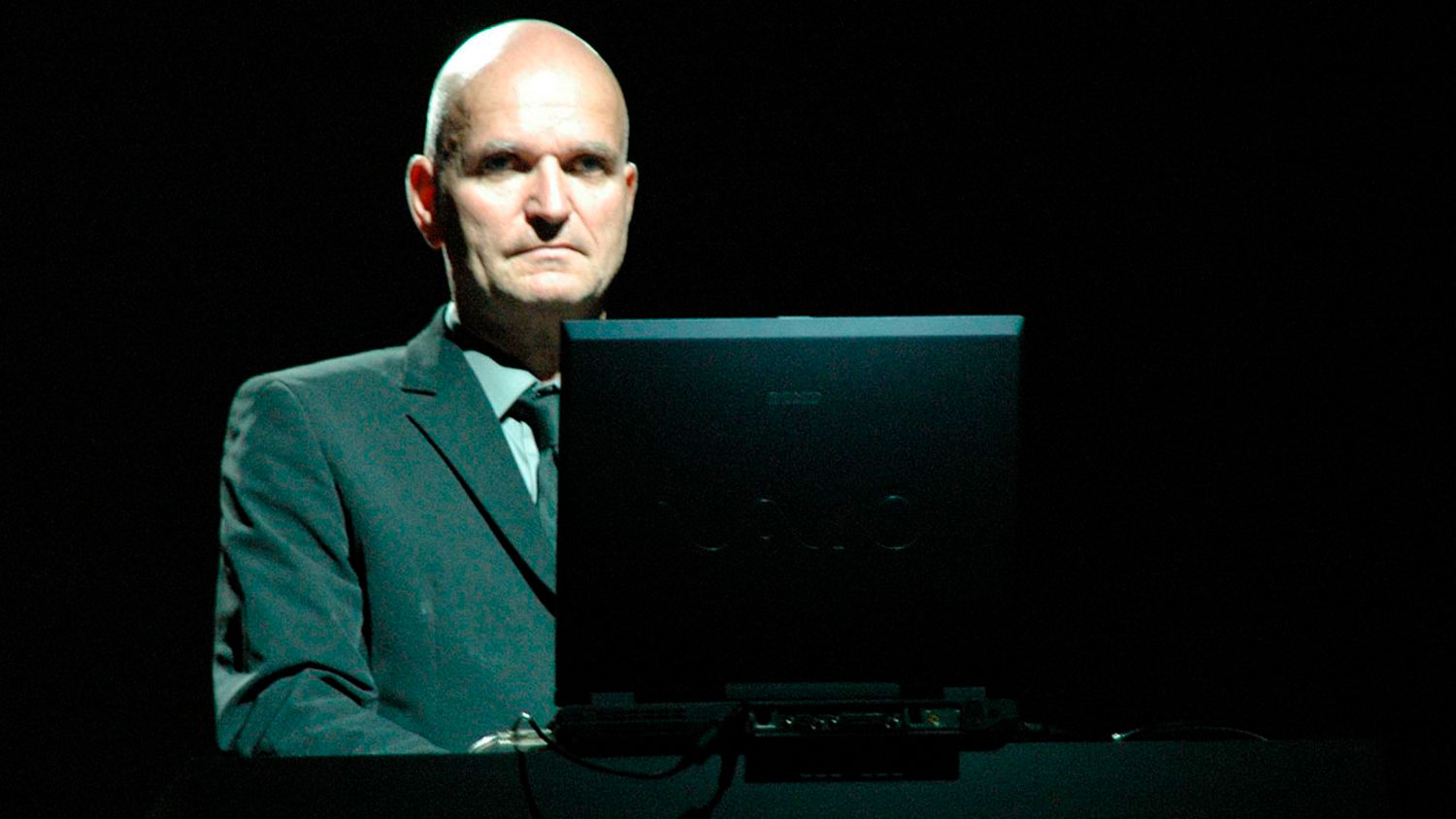
В возрасте 73 лет скончался один из основателей немецкого музыкального коллектива Kraftwerk Флориан Шнайдер, сообщает Billboard.
Коллектив внес значительный вклад в развитие электронной музыки. Группа была основана в 1968 году Флорианом Шнайдером и Ральфом Хюттером.
Шнайдер играл на синтезаторе, флейте, саксофоне и многих других инструментах, а также занимался вокалом. Он покинул группу в 2008 году. Незадолго до его смерти группа объявила, что отправится в летний тур по Северной Америке в честь своего 50-летия, однако шоу были отменены из-за пандемии коронавируса.
Kraftwerk получили Grammy за лучший электронный альбом в 2017 год и были удостоены награды за достижения в 2014 году.